WasteWarden
A crow-assisted waste sorting service system
Personal Portfolio Project
Service Design · More-than-human Interaction
In some cities, crows have become closely entangled with human waste systems. In Tokyo, for example, crows have been reported to tear open garbage bags at collection points, scattering food waste and creating problems for residents and sanitation workers.
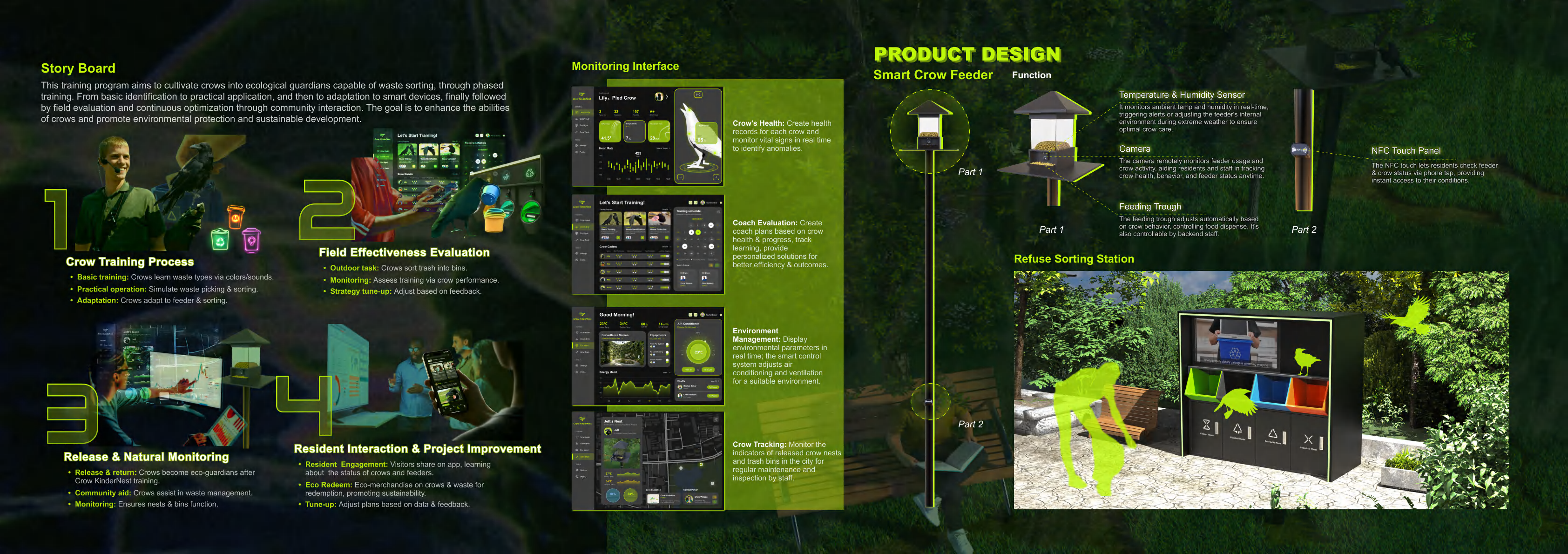
WasteWarden explores how this conflict could be turned into a more constructive relationship. The project proposes a service system that uses smart feeders, sorting stations and a resident app to guide trained crows in community waste sorting.
Research & Opportunity
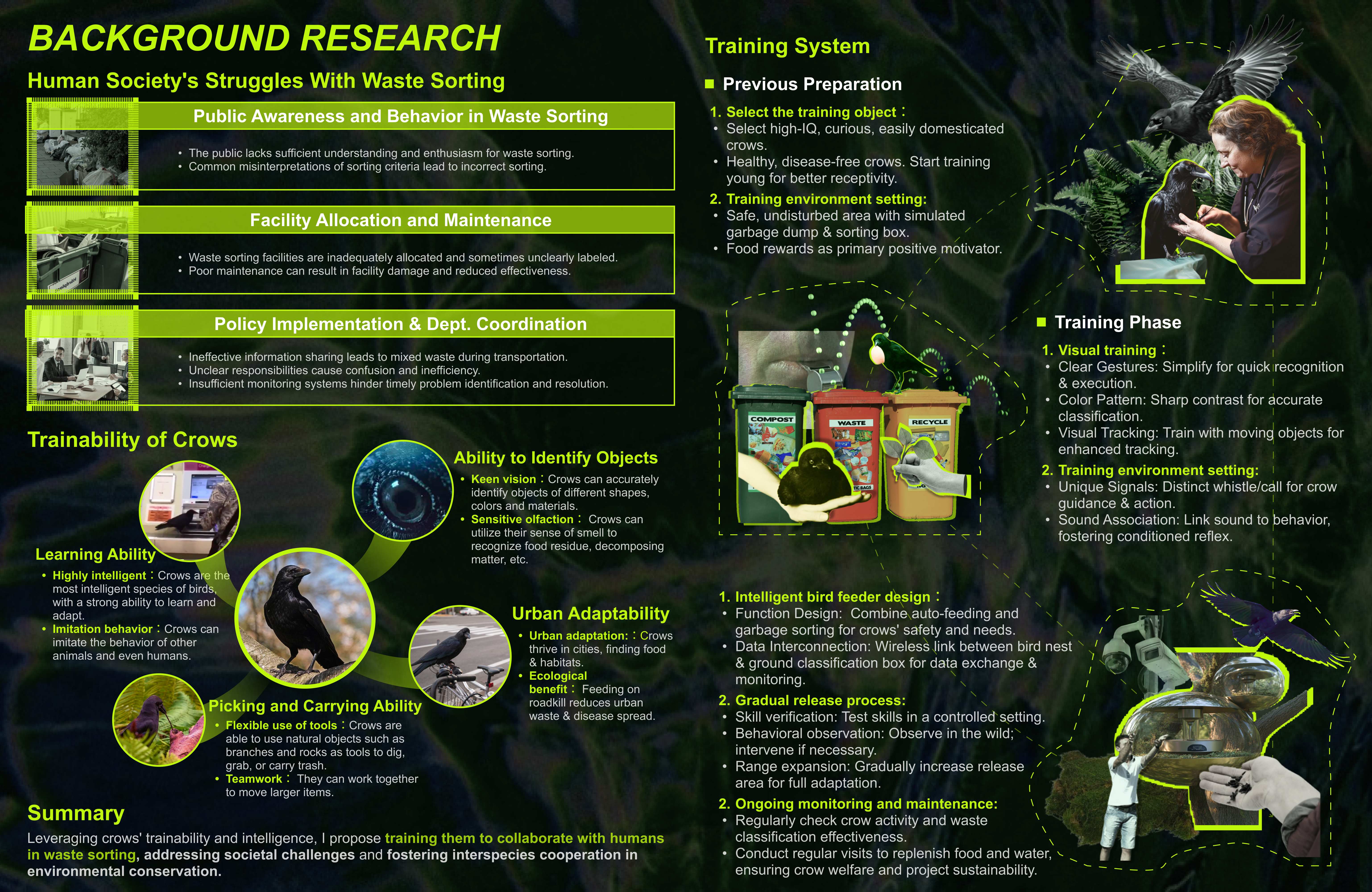
The research focused on two connected issues: the limits of human waste sorting behaviour, and the trainability of crows. Public awareness, facility maintenance and policy coordination can all affect how accurately waste is sorted in everyday communities.
Crows are highly adaptable urban animals. Their learning ability, visual recognition and picking behaviour opened an opportunity to imagine waste sorting as a collaborative system between humans and non-human species.
System Concept
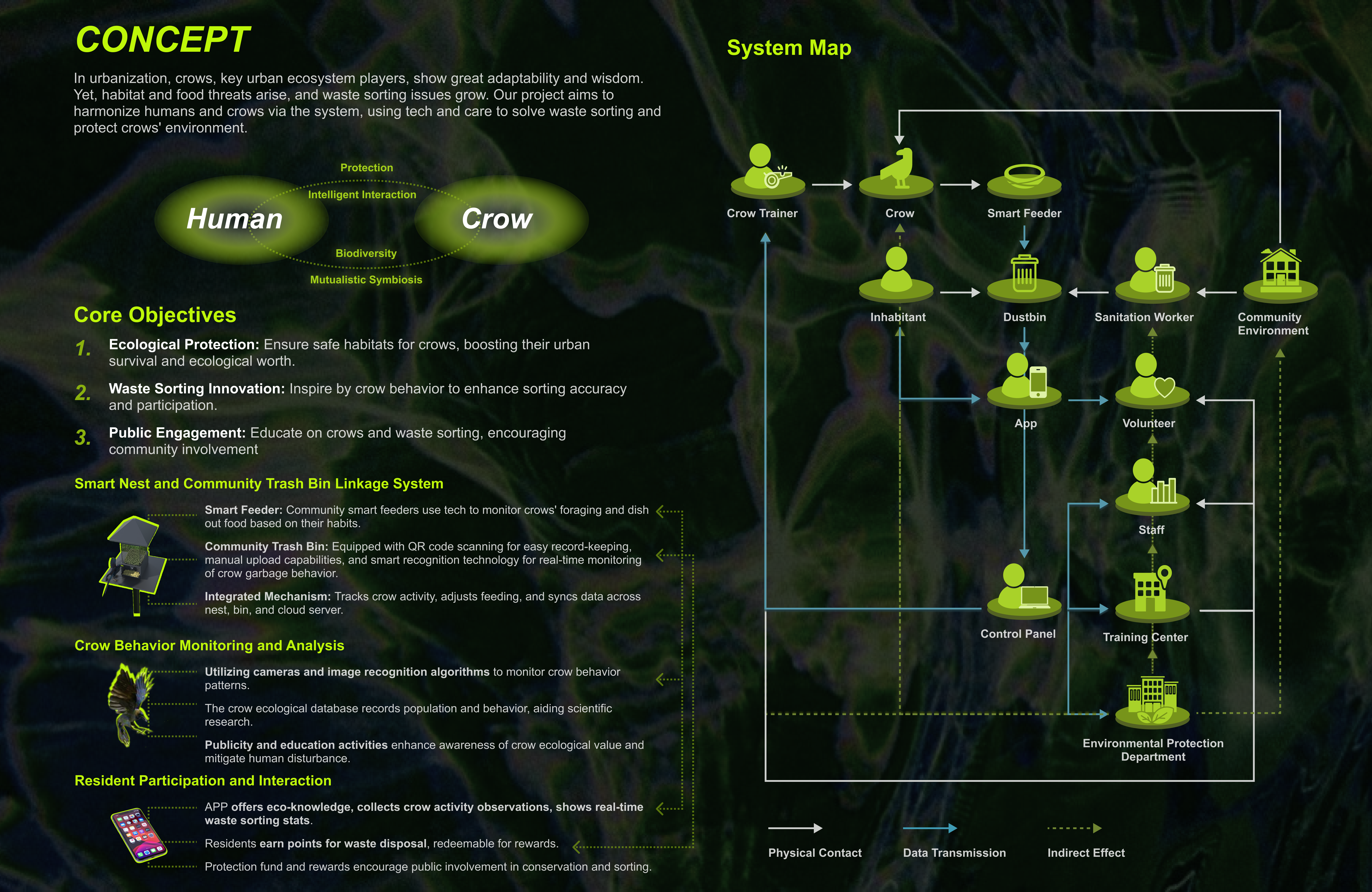
The system connects crow trainers, smart feeders, sorting stations, residents, volunteers and sanitation workers. Crows are trained through visual cues, sound signals and food rewards, while residents and staff use the app to monitor activity, report issues and support the training process.
This turns waste sorting into a visible community service, where animal behaviour, digital monitoring and public participation work together.
Product & Interface
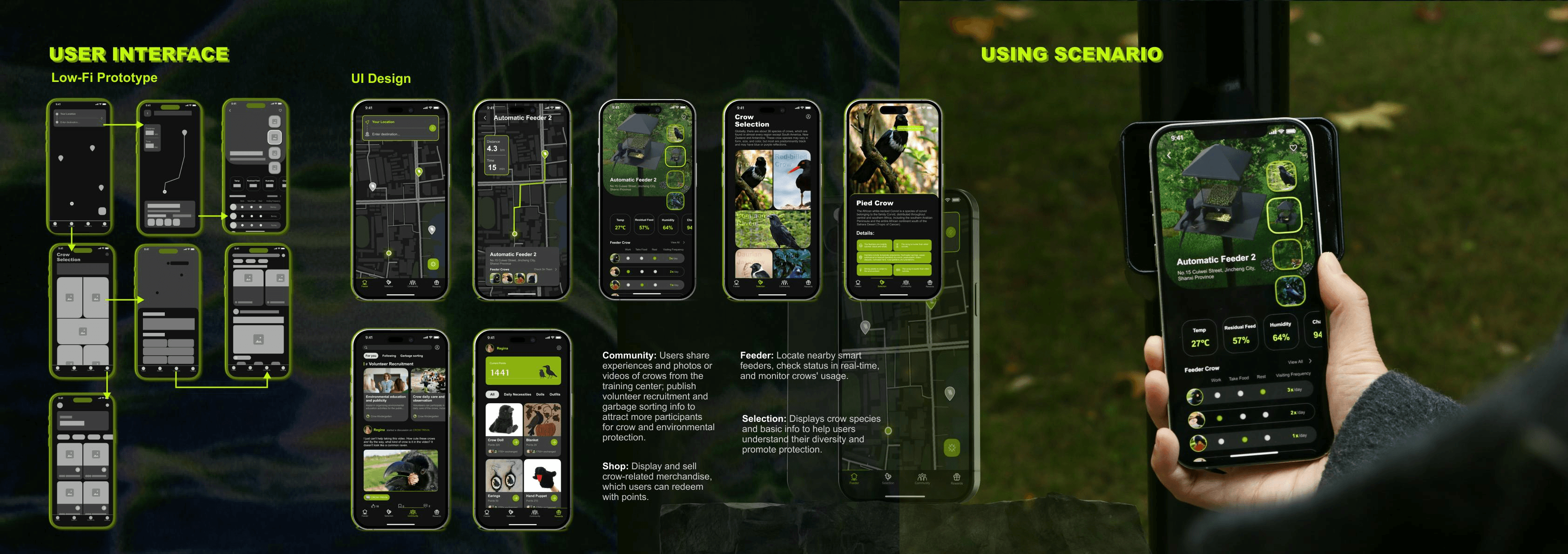
The final proposal includes a smart crow feeder, a refuse sorting station, a monitoring interface and a resident app. The feeder records crow activity and adjusts feeding, while the sorting station supports waste classification and data collection.
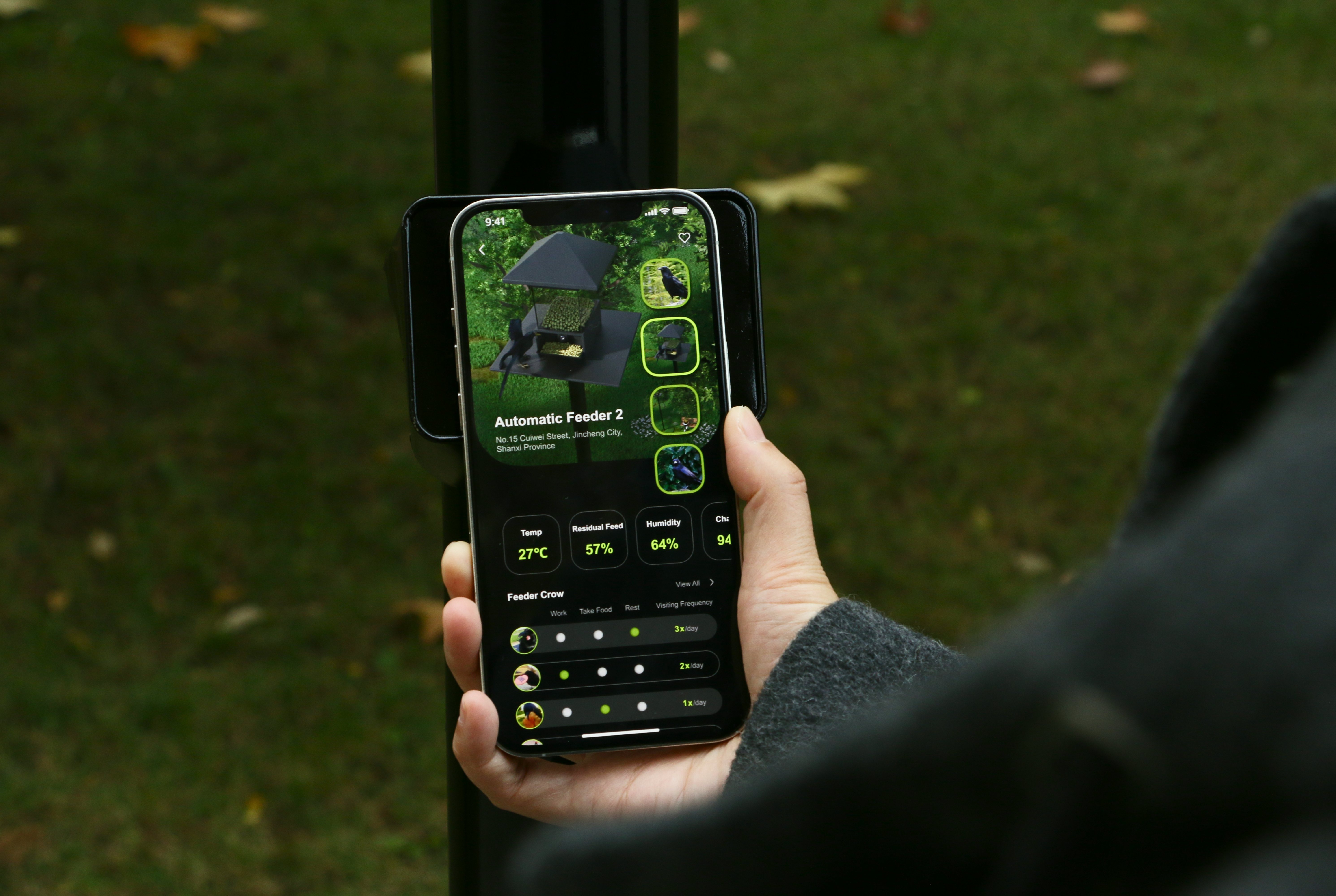
The app allows residents to locate nearby feeders, check crow activity, view environmental data and participate in community-based waste sorting.